When your ’lectric bill is giving you a lickin’…
Disasters make power even more seriousWhen the grid goes down, dinner still matters
Disaster Cooking
Outages, fires, earthquakes, storms, and utility shutdowns can turn food into a crisis. Solar Chicken says: plan before the lights go out, protect refrigeration, and keep a safe way to cook.
The disaster cooking idea
Emergency food planning is an energy plan.
During a disaster, food depends on power, fuel, water, storage, sanitation, and safe cooking. A solar oven may help on sunny days. A battery-backed system may protect refrigeration, lighting, communications, and selected appliances.
Solar Chicken keeps the message simple: do not wait until the outage to decide how food will stay cold and how meals will be cooked.
- Protect refrigeration before food spoils.
- Plan safe cooking methods that do not depend on the grid.
- Use solar ovens when direct sun and time are available.
- Use batteries for critical loads, lighting, communications, and selected appliances.
- Keep water, sanitation, ventilation, and food safety at the center of the plan.
Just call for Solar Chicken!
Plan before the outage
Call for Solar Chicken!
Call for Solar Chicken dot com!
The Solar Chicken Song stays visible because the same roof, sun, and bill conversation becomes more urgent during outages.
Emergency food priorities
Cold food, safe heat, clean water, working lights.
Disaster cooking is not only about the stove. A real plan looks at the whole food chain: refrigeration, cooking, water, sanitation, ventilation, communication, and safe serving.
Refrigeration
Refrigerators and freezers are often the first critical food loads to protect with backup power.
Cooking Method
Solar ovens, battery appliances, propane, or other safe backup methods should be planned in advance.
Water & Sanitation
Food safety requires clean hands, clean tools, safe water, and a way to manage waste.
Lighting & Comms
Cooking safely during an outage also needs lights, phones, internet, radios, and basic information.
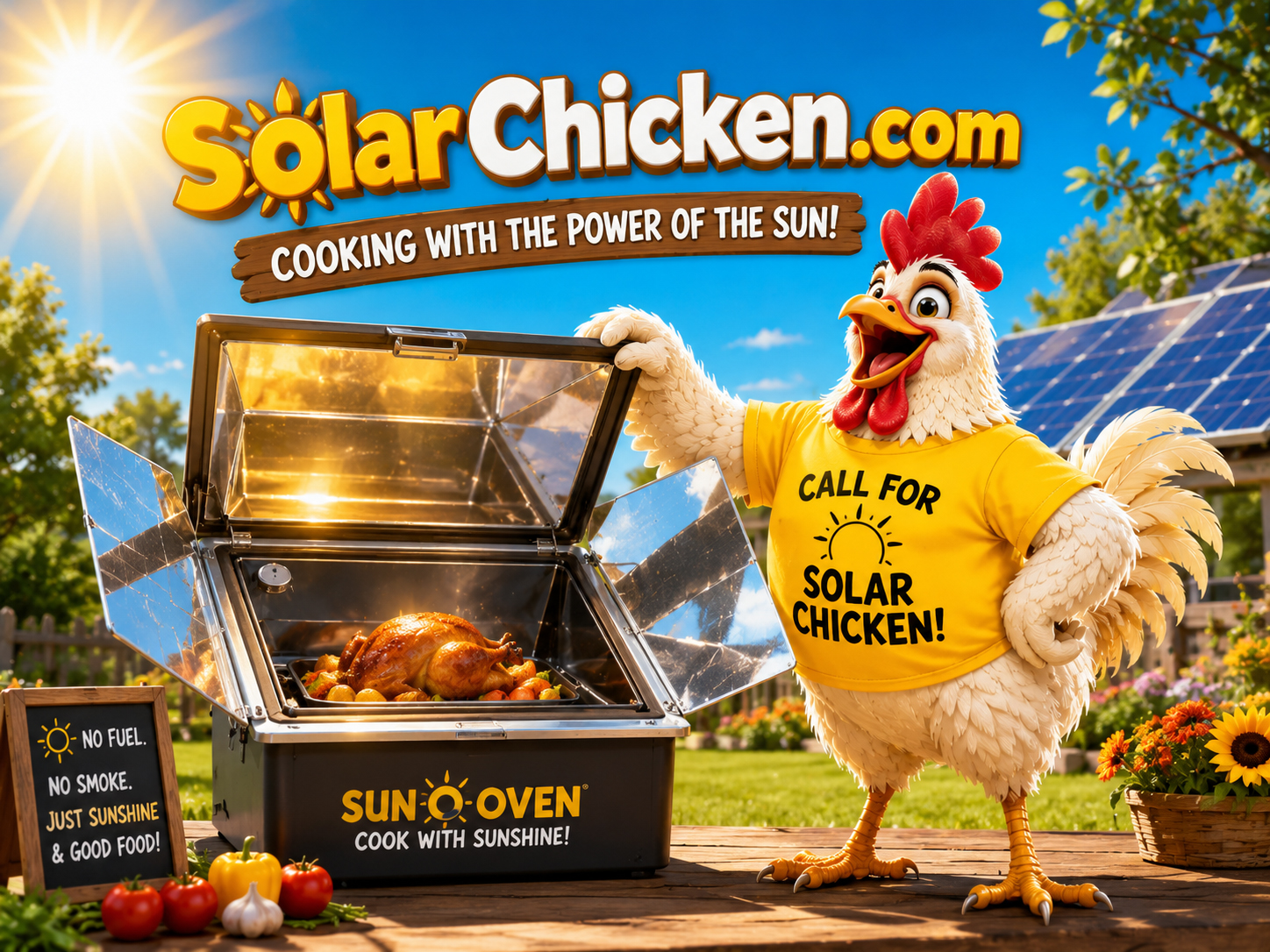
Solar ovens in emergencies
Solar ovens can help, but they are not the whole plan.
A solar oven can be useful when the sun is strong, the cooking schedule is flexible, and the food can be cooked safely with slower heat. It can reduce fuel use and give families another way to prepare simple meals.
But disaster planning cannot depend on perfect weather. A serious plan should include backup cooking, protected refrigeration, stored water, shelf-stable food, and battery-backed critical loads.
- Use solar ovens for sunny-day backup cooking.
- Do not depend on weak sun for safety-critical meat cooking.
- Keep a backup cooking method for cloudy days and urgent meals.
- Use battery backup for loads solar ovens cannot handle.
Battery backup
The refrigerator is usually more urgent than the recipe.
In a real outage, the first food question is often not “what can we cook?” It is “how long will the refrigerator and freezer stay cold?” Battery backup can protect selected critical loads and give the household or business more time to manage the event.
For homes and restaurants, backup circuits should be chosen carefully. Refrigeration, internet, lights, garage access, medical equipment, pumps, and security may matter more than trying to power the whole property.
- Identify the critical food and safety loads first.
- Size batteries around real equipment and outage goals.
- Use solar to recharge batteries during extended daylight outages.
- Do not assume every appliance can be backed up without design review.
- Plan before fire season, earthquake season, storms, or utility shutdowns.
Solar Chicken rule
A hot meal is good. A cold refrigerator is critical. Plan for both.
“Disaster cooking starts before the disaster.”
Solar Chicken emergency rule
Disaster cooking checklist
What should be decided before the outage?
A good emergency food plan is practical, redundant, and safe. Do not rely on one device, one fuel, one appliance, or one sunny forecast.
Cold Storage
Decide which refrigerator, freezer, or medical cold-storage loads need battery backup.
Cooking Backup
Choose safe cooking methods for sunny days, cloudy days, nighttime, and urgent meals.
Water Plan
Store drinking water and plan for washing hands, tools, cookware, and food surfaces.
Food Supply
Keep shelf-stable meals, canned goods, dry foods, and simple recipes that do not require complicated cooking.
Lighting
Safe cooking needs light. Backup lighting and charging can prevent accidents after dark.
Critical Loads
List what must stay on: refrigerator, freezer, modem, phones, lights, pumps, medical equipment, or security.
Keep the anthem attached
The disaster page still sings.
Solar Chicken’s anthem is the bridge from humor to action. The line about the electric bill becomes even more serious when the grid is down and the customer needs real power resilience.
When you find your sun is steady,
When your roof is new and ready…
When your ’lectric bill is giving you a lickin’…
The warning
Call for Solar Chicken!
Call for Solar Chicken dot com!
Emergency food questions
- What food must stay cold?
- What cooking method works without grid power?
- How much water is stored?
- What lights and communications stay on?
- Can solar recharge batteries during the outage?
- What is the backup plan when weather is bad?
Next pages
From disaster cooking to practical resilience.
Disaster cooking connects naturally to battery backup, solar ovens, off-grid cooking, restaurant refrigeration, home solar, and ABC Solar contact.
Battery Backup
Protect refrigeration, lights, communication, pumps, and selected critical loads.
Battery backup →Solar Ovens
Use direct sunlight as one emergency cooking tool when conditions are right.
Solar ovens →Off-Grid Cooking
Plan food systems where conventional power is limited or unavailable.
Off-grid →Restaurants
Protect refrigeration, POS, lighting, and critical food-business operations.
Restaurant solar →How It Works
Connect solar panels, batteries, critical loads, backup circuits, and cooking options.
Learn →Call ABC Solar
Ask about solar, batteries, emergency backup, or practical project review.
Contact →ABC Solar Incorporated
Disaster cooking teaches the need for resilient power.
SolarChicken.com uses food, humor, and song to make solar resilience memorable. ABC Solar Incorporated provides solar power systems, battery backup systems, and practical energy design for homes, businesses, and special projects.
California Contractor License CCL#914346.
Call when you want:
- Battery backup for refrigeration or critical loads.
- Solar power for outage resilience.
- Emergency cooking demonstration planning.
- Restaurant or home backup review.
- A practical ABC Solar project review.