When your ’lectric bill is giving you a lickin’…
Restaurants feel this lineFood businesses use serious power
Solar for Restaurants
Restaurants run refrigerators, freezers, HVAC, lighting, point-of-sale systems, ventilation, water heating, cooking equipment, and sometimes EV charging. Solar Chicken says the electric bill deserves a hard look.
The restaurant solar idea
Restaurants are energy businesses hiding inside food businesses.
A restaurant is not just a dining room and a kitchen. It is a refrigeration system, lighting system, air-conditioning load, exhaust system, communications system, payment system, and sometimes a delivery or charging operation.
That makes solar and battery backup worth reviewing. A food business may have a high daytime load, painful demand patterns, expensive evening use, and major losses if refrigeration fails during an outage.
- Review the restaurant’s actual electric bill and usage patterns.
- Identify refrigeration, freezer, lighting, POS, and ventilation loads.
- Use solar to offset daytime business power where possible.
- Use batteries to support timing, backup, and resilience goals.
- Plan around the roof, service equipment, utility rules, and business hours.
Just call for Solar Chicken!
Start the review
Free money from the state can’t overlook it,
Solar systems are ready, so it’s time to book it!
The Solar Chicken Song stays on the restaurant page because the bill pain is the bridge from mascot joke to real business conversation.
Restaurant loads
What needs power in a food business?
Restaurants have many loads that do not behave like a simple home. A useful solar review starts by identifying which loads run during the day, which run into the evening, and which cannot fail.
Refrigeration
Walk-ins, reach-ins, prep tables, freezers, ice machines, and cold storage can be mission-critical.
HVAC
Dining rooms and kitchens can drive major cooling loads, especially during hot afternoon business hours.
Lighting & POS
Customer areas, signs, kitchen lighting, internet, routers, and payment systems need reliable power.
Kitchen Systems
Ventilation, hoods, controls, water heating, prep equipment, and electric appliances shape the load profile.
Food meets energy
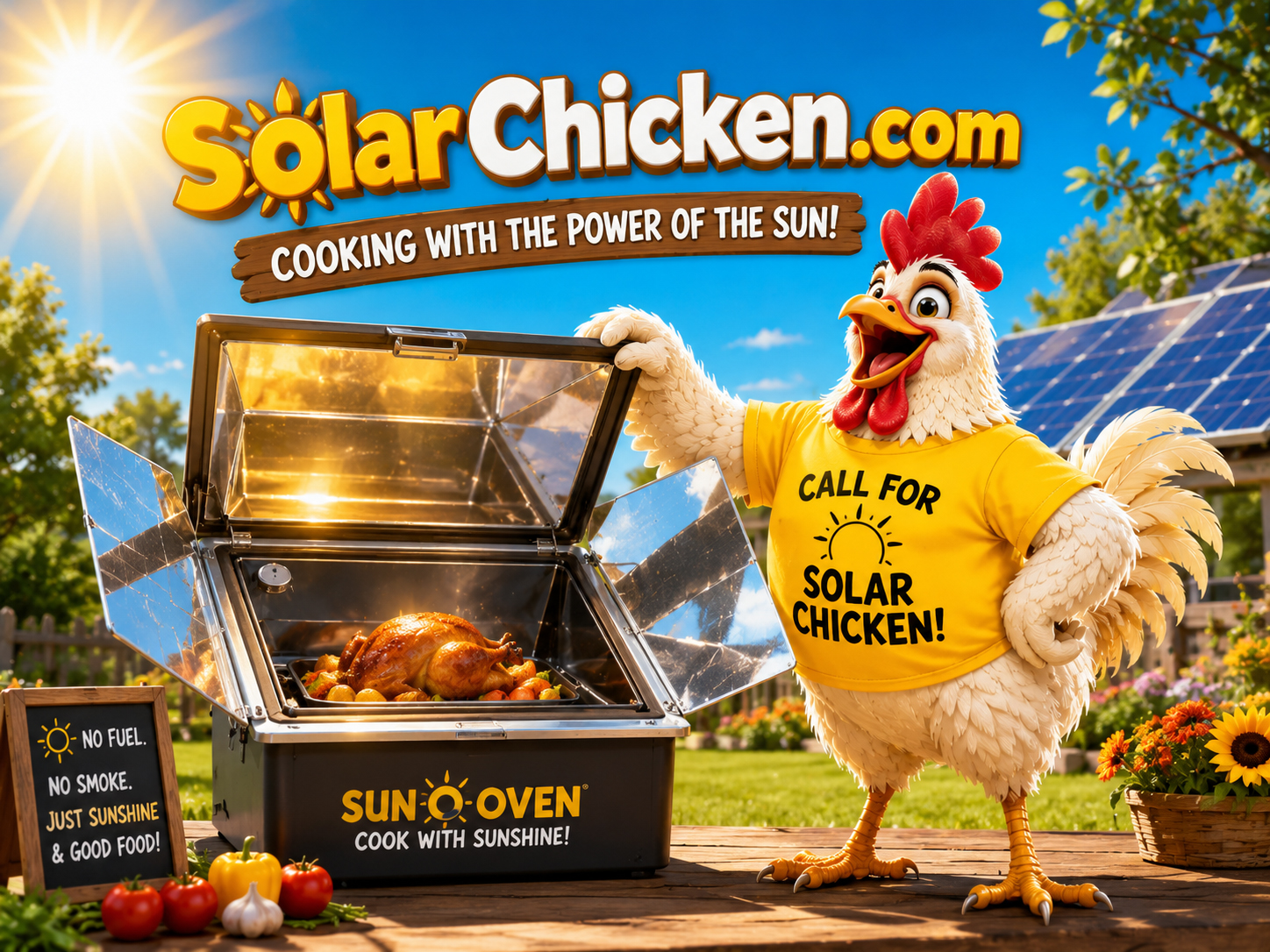
Solar cooking is the hook. Restaurant power is the business case.
Solar Chicken Cooking can get attention with food, sunlight, and humor. But a restaurant owner’s real concern is the monthly utility bill, food safety, refrigeration, customer service, and staying open when power is expensive or unreliable.
That is why SolarChicken.com can talk about both: the fun demonstration and the serious energy plan. The mascot makes the first conversation easier. ABC Solar handles the real design.
- Solar cooking creates a memorable food story.
- Solar electric systems address the building load.
- Batteries can support selected critical operations.
- Restaurant economics start with real bills and real hours.
Backup matters
A restaurant outage can spoil more than dinner.
For a restaurant, backup power is not just comfort. Refrigeration failure can risk inventory. Payment systems and internet failures can stop transactions. Lighting and safety systems matter for staff and customers.
Battery backup should be designed around selected critical loads, not wishful thinking. The review should identify what must stay on, how long it should stay on, and whether solar can recharge the batteries during extended interruptions.
- Refrigerators and freezers may need priority.
- POS, internet, and phones can be critical to sales.
- Lighting and security may need backup circuits.
- Kitchen loads must be evaluated carefully before backing up.
- Battery size should match real equipment and outage goals.
Solar Chicken translation
The chicken can sing in the dining room. The walk-in cooler still has to stay cold.
“Restaurants sell food, but they run on electricity every minute they are open.”
Solar Chicken restaurant rule
Restaurant review checklist
What ABC Solar needs to review.
A useful restaurant solar conversation begins with the building, the bills, the hours, and the equipment that must not fail.
Electric Bills
Usage, rates, demand charges, and business-hour load patterns help shape the project.
Business Hours
Breakfast, lunch, dinner, prep time, and late-night operation all affect when energy is used.
Roof & Structure
Roof space, shade, HVAC equipment, vents, grease exhaust, and roof age affect panel layout.
Critical Equipment
Identify refrigeration, freezers, POS, internet, lights, security, and other must-run loads.
Electrical Service
Main service size, panels, switchgear, available space, and utility requirements matter.
Future Plans
Expansion, new equipment, electric cooking, EV charging, or additional locations may change the plan.
Keep the anthem attached
The restaurant page still sings.
The Solar Chicken Song is still the hook. For restaurants, the lyric about the electric bill connects directly to the monthly cost of staying open.
When your ’lectric bill is giving you a lickin’…
The restaurant pain
Free money from the state can’t overlook it,
Solar systems are ready, so it’s time to book it!
Call for Solar Chicken!
Call for Solar Chicken dot com!
Restaurant questions
- How high is the monthly electric bill?
- Are there demand charges?
- What equipment runs during peak hours?
- What refrigeration must stay on during outages?
- Is there usable roof or canopy space?
- Are EV charging or expansion plans coming?
Next pages
From restaurant loads to the full solar plan.
A restaurant solar review may connect to bills, backup, solar cooking, EV charging, home-style panels, and full commercial energy planning.
Electric Bill
Start with the cost problem and the real rate schedule.
Fight the bill →Battery Backup
Protect refrigeration, POS, lighting, and selected critical loads.
Battery backup →Solar Cooking
Use the Solar Chicken food story as a memorable demonstration hook.
Cooking hub →EV Cowboy
EV charging can add a major new load to restaurant energy planning.
Read episode →How It Works
Connect panels, batteries, inverters, critical loads, and monitoring.
Learn →Call ABC Solar
Ask for a practical restaurant solar and battery review.
Contact →ABC Solar Incorporated
When the kitchen runs on power, call the contractor.
SolarChicken.com uses food, humor, and song to make solar memorable. ABC Solar Incorporated provides solar power systems, battery backup systems, and practical energy design for homes and businesses.
California Contractor License CCL#914346.
Call when:
- Your restaurant electric bill is too high.
- You need refrigeration or POS backup planning.
- You want solar on a restaurant roof or canopy.
- You are planning EV charging or new electric equipment.
- You want a practical ABC Solar project review.