When you find your sun is steady,
When your roof is new and ready…
Sunlight, systems, savings, supper
How It Works
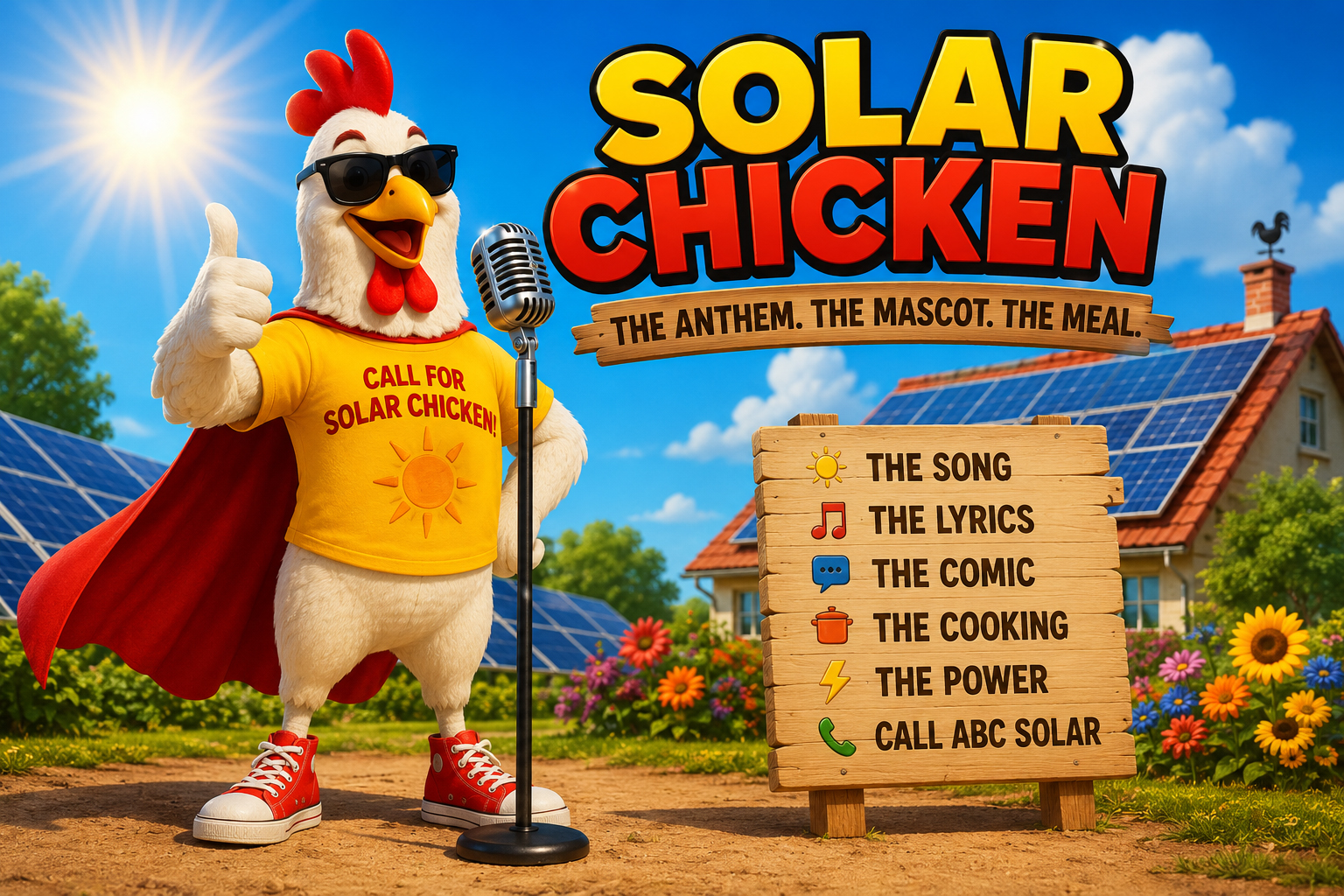
Solar Chicken has two meanings: the funny mascot and the real solar lesson. Sunlight can make electricity, charge batteries, heat food, protect critical loads, and fight the electric bill that keeps giving customers a lickin’.
The basic solar system
Solar starts when sunlight hits the equipment.
A solar electric system uses photovoltaic panels to convert sunlight into electricity. That electricity is managed by inverters, connected to the building’s electrical system, and used by the home or business.
When batteries are added, the system can store solar energy for later use, expensive evening hours, outages, and selected critical loads.
- Solar panels capture sunlight and produce DC electricity.
- Inverters convert and manage the power for building use.
- Batteries store energy for later use and backup.
- Critical-load panels decide what stays on during outages.
- Monitoring helps the owner see production, storage, and usage.
When your ’lectric bill is giving you a lickin’…
The reason to actJust call for Solar Chicken!
The next stepThe lyric explains the customer journey: good sun, ready roof, painful bill, practical call.
Four working pieces
The Solar Chicken system is easy to explain.
The site should keep the technical story simple. Visitors do not need a lecture first. They need to understand what each piece does.
Panels Make Power
Solar panels use sunlight on the roof, canopy, or ground area to produce electricity during the day.
Inverters Manage Power
Inverters convert solar electricity and coordinate how power is used by the building and batteries.
Batteries Store Power
Batteries hold energy for evening use, backup power, peak-rate strategy, and resilience.
Loads Use Power
Refrigerators, lighting, internet, pumps, appliances, restaurant equipment, and EV chargers are the reason the system exists.
Why batteries changed solar
The timing of power matters.
Solar panels make their strongest power during daylight. Many homes and businesses use important power in the evening, during outages, or at times when utility rates are expensive.
Batteries help bridge that timing gap. They let a customer store energy, support selected loads, and use more of the solar power produced on the property.
- Daytime solar can be stored for later use.
- Critical loads can stay on during outages.
- Peak utility pricing can be reduced with good strategy.
- Low export values make self-use more important.
- Backup planning should be based on real loads, not guesses.
Solar cooking side
Solar cooking uses the sun as heat instead of electricity.
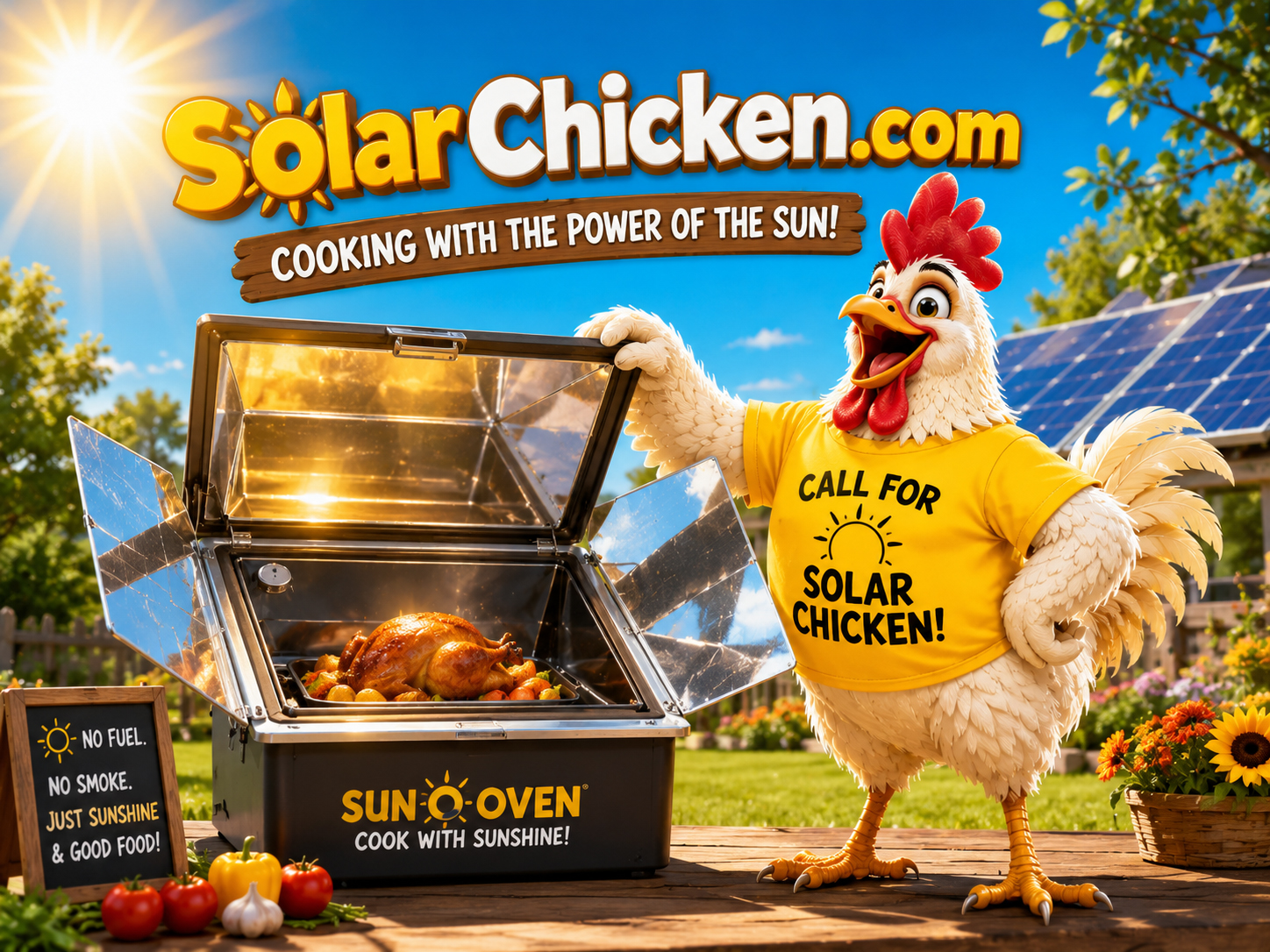
SolarChicken.com also has a literal cooking branch. Solar ovens and solar thermal cooking use sunlight directly as heat. Reflectors, dark cookware, clear covers, and insulation collect and hold that heat long enough to cook food.
Solar electric and solar thermal are different tools. One makes electricity. One makes heat. Solar Chicken connects both ideas because both prove the same point: sunlight is useful energy.
- Solar electric turns sunlight into electricity.
- Solar thermal turns sunlight into heat.
- Solar ovens make the lesson visible and edible.
- Batteries make electric solar useful after the sun drops.
“Panels make the power. Batteries hold the power. The chicken makes people remember.”
Solar Chicken system rule
Project review process
How a real solar review should proceed.
Solar Chicken gets attention. ABC Solar still has to review the property properly. The right answer depends on bills, roof, loads, batteries, electrical equipment, and customer goals.
Review the Bill
Usage history, rates, time-of-use periods, and demand charges help define the problem.
Review the Roof
Roof age, orientation, shade, vents, structure, and available layout determine solar potential.
Review the Panel
Electrical service, main panel, subpanels, disconnects, and code requirements affect the installation.
Define Critical Loads
Decide what must stay on during an outage: refrigerator, internet, lights, pumps, POS, medical equipment, or business loads.
Plan the Battery
Battery size and inverter capacity should match real backup and time-of-use goals.
Build the System
Permits, utility interconnection, installation, inspection, commissioning, and monitoring complete the project.
Keep the anthem attached
The song explains the system in human language.
Technical pages can lose people. The Solar Chicken Song keeps the message human: sun, roof, bill, call. That is the complete customer pathway.
When you find your sun is steady,
When your roof is new and ready,
When your ’lectric bill is giving you a lickin’…
Free money from the state can’t overlook it,
Solar systems are ready, so it’s time to book it!
Call for Solar Chicken!
Call for Solar Chicken dot com!
System questions
- What does the electric bill show?
- Is the roof ready for solar?
- What must stay on during outages?
- Are batteries needed for backup or peak rates?
- Are EV charging or new appliances planned?
- Does the electrical panel need work?
Learn the branches
Where to go next.
This page is the system overview. The next pages break the story into bills, batteries, homes, restaurants, cooking, and emergency resilience.
Electric Bill
Start with the problem every customer understands: cost.
Fight the bill →Battery Backup
Store energy, protect loads, and improve resilience.
Backup power →Solar for Homes
Turn a ready roof into a working home energy system.
Home solar →Restaurants
Review refrigeration, HVAC, lighting, POS, and food-business energy loads.
Restaurant solar →Solar Cooking
Use food and sunlight to make the solar lesson visible.
Cooking hub →Call ABC Solar
Ask for a practical review of the property, bill, roof, battery, and loads.
Contact →ABC Solar Incorporated
The mascot explains it. ABC Solar designs it.
SolarChicken.com uses humor, song, cooking, and comic-strip logic to make solar memorable. ABC Solar Incorporated provides solar power systems, battery backup systems, and practical energy design for homes and businesses.
California Contractor License CCL#914346.
Call when you want:
- A solar and battery system review.
- A home or restaurant solar plan.
- Critical-load backup planning.
- Solar cooking or demonstration ideas.
- A practical ABC Solar project review.